
Back to Resources
Texas SB 1883 Impact Fee Changes: What Small Cities Must Know
Blog
June 22, 2026
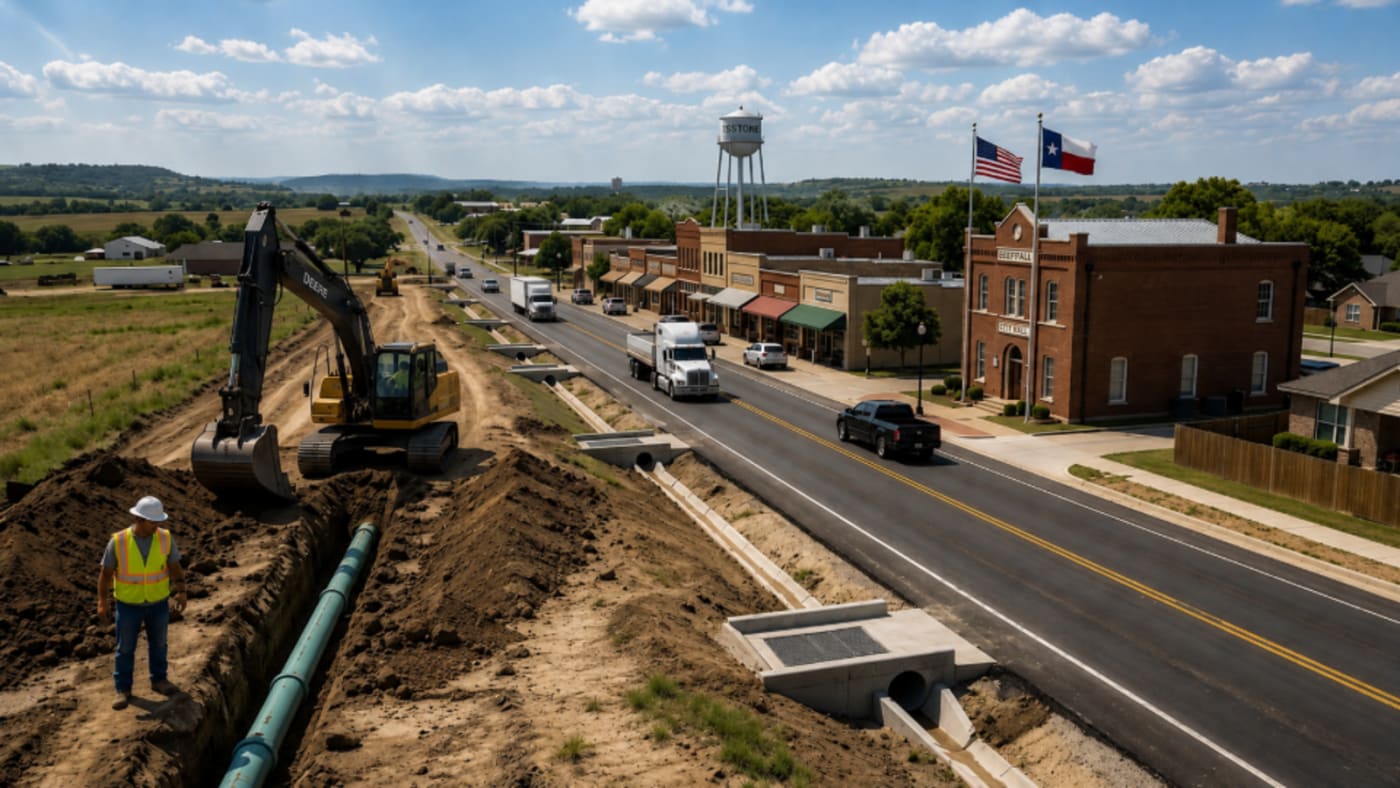
Texas SB 1883 changes impact fees from a routine planning tool into a test of municipal financial discipline. Small and mid-sized cities must now build stronger forecasts, earlier capital plans, and clearer public records so growth pays its fair share without shifting tomorrow’s infrastructure burden onto today’s taxpayers alone.
The New Duty of Consensus
Texas SB 1883, became effective September 1, 2025, amends Chapter 395 of the Texas Local Government Code. It requires a two-thirds vote to impose an impact fee, bars increases for three years after adoption or the latest increase, requires earlier public release of land use assumptions and capital improvement plans, and raises advisory committee industry representation from 40% to 50%.
That is not a small procedural change. It is a new governing reality.
For a five-member council, four votes may be needed. For a seven-member council, five votes may be needed. In communities where one road, one lift station, or one water line can reshape the budget, consensus is no longer helpful. It is required.
Budgets are tight. Timelines are shorter. Citizens expect more.
Cities must now prepare impact fee proposals that can withstand public review, council debate, developer scrutiny, and financial stress. The old habit of annual adjustment will not be enough.
The Stewardship of Growth
For small Texas cities, especially those between 1,000 and 20,000 residents, SB 1883 may hit hardest. These communities often carry the same infrastructure duties as larger cities, but with thinner staff, smaller tax bases, and fewer planning resources.
When growth comes, the invoices follow:
- Water lines
- Sewer extensions
- Lift stations
- Road capacity
- Drainage improvements
If impact fees cannot move with cost inflation, the pressure shifts elsewhere. Utility rates rise. Debt grows. Certificates of obligation become more tempting. Existing taxpayers may carry more of the burden for new development.
We know the weight of legacy systems; we understand the cost of the status quo. Most city teams are doing the best they can with the tools they have. But SB 1883 makes the margin for error smaller. A capital plan that lives outside the budget process can quickly become a problem when costs rise and fees cannot be changed for three years.
For mid-sized cities between 20,000 and 80,000 residents, adoption may not be the main issue. Many already have impact fee programs in place. The real work now is forecasting, documenting assumptions, and preparing for cost changes before they arrive. SmartFusion’s Budget Preparation system supports multiple budget models, approval comparisons, forecasting, departmental input, and reporting, which directly supports this new need for disciplined multi-year planning.
The Machinery of Public Trust
SB 1883 is often described as a development bill. For local government, it is also a finance bill. It asks cities to prove, earlier and more clearly, how infrastructure decisions are made.
The path forward is practical:
- Build a three-year impact fee forecast before adoption.
- Tie every fee study to the capital improvement plan.
- Model utility rate impacts before council action.
- Publish assumptions early and plainly.
- Keep records audit-ready from the first discussion.
A city that knows its costs.
A city that explains its choices.
A city that protects its taxpayers.
That is the standard now.
This is not just a planning issue. Finance staff, utility billing teams, purchasing clerks, and department heads will all feel it when growth costs move faster than fee updates.
SmartFusion helps connect that work, giving cities a clearer view of budgets, projects, utility revenue, and public-facing financial information.
SB 1883 will not stop growth. It will expose whether a city is ready to govern it.
Lead the numbers before the numbers lead the city. The duty is clear: plan earlier, forecast honestly, and make public trust visible in every capital decision.
Growth will test every city’s budget, utility plan, and capital forecast. Contact SmartFusion to see how your team can bring the numbers together, plan with confidence, and give council the clarity needed to make the next infrastructure decision wisely.


